Apollo 11 mission
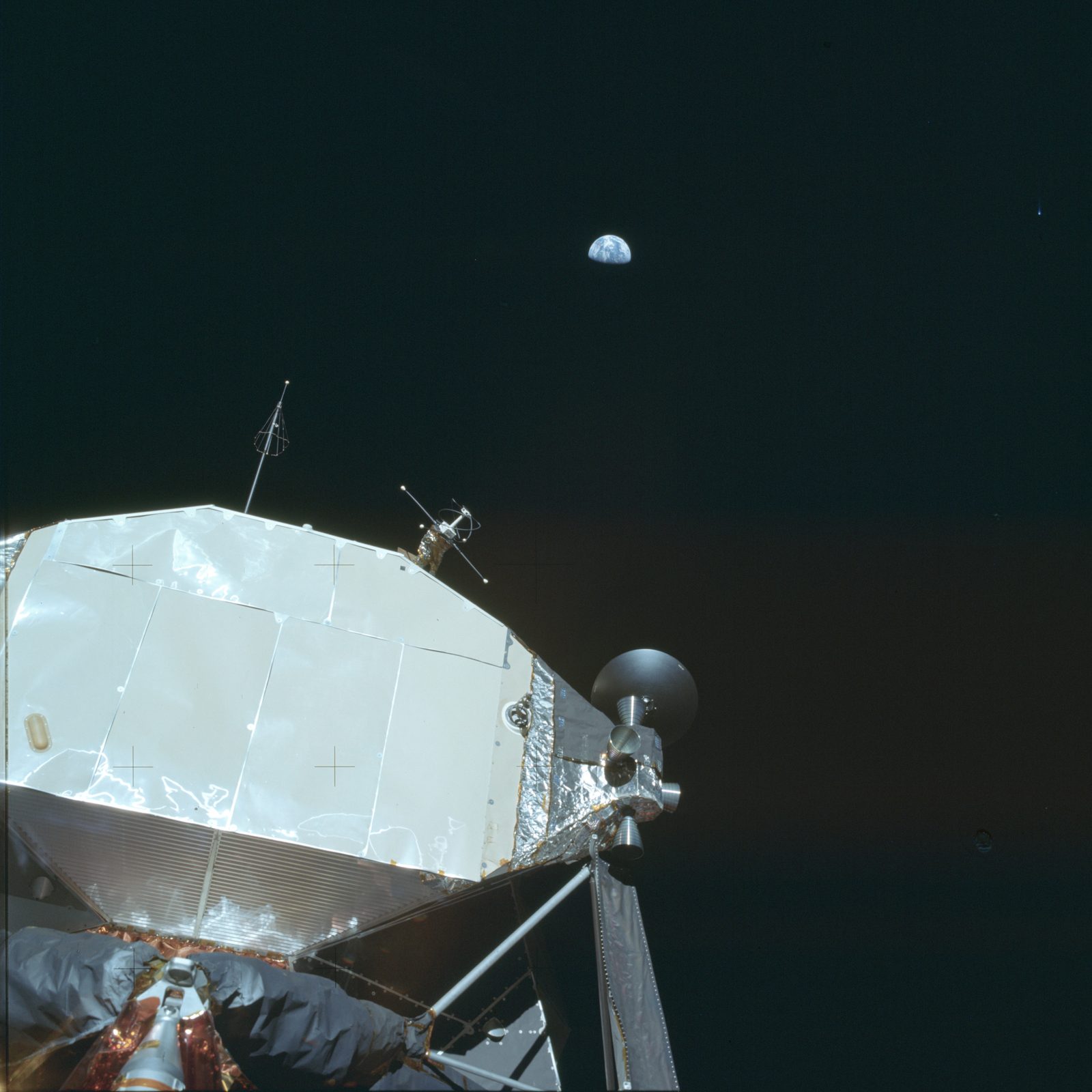
Apollo 11 was the first crewed mission to land humans on the Moon. Classified by NASA as a “G Type Mission, Lunar Landing” (vehicle set SA‑506 / CSM‑107 / LM‑5), its single primary objective was to “perform crewed lunar landing and return,” with subordinate objectives of selenological inspection and sampling and of assessing astronaut/equipment capability in the lunar surface environment.
The crew were Neil A. Armstrong (Commander), Michael Collins (Command Module Pilot), and Edwin E. “Buzz” Aldrin, Jr. (Lunar Module Pilot). A Saturn V launched the stack at 9:32 a.m. EDT on July 16, 1969 from Kennedy Space Center Launch Complex 39-A — the fifth crewed Apollo flight and the third to the Moon; after translunar coast and lunar orbit insertion, the Lunar Module Eagle descended to Tranquility Base (Landing Site 2) on July 20, 1969 while Collins remained in the Command Module Columbia. Armstrong and Aldrin conducted a single two‑person EVA, deployed the EASEP experiments, and collected the first lunar samples. After lunar liftoff, rendezvous, and transearth coast, the crew splashed down in the Pacific on July 24, 1969 — 195:18:18 GET, about 8 days 3 hours after liftoff, the air-to-ground transcript’s last word — and entered quarantine. (The mission’s full as-flown spine, with the GET↔UTC conversion rule, is laid out in the nominal mission timeline.)
Eleven days later the crew walked through the whole flight, phase by phase, in the Technical Crew Debriefing (two volumes) — the candid first-person, lessons-learned record behind the planning documents and the telemetry.
Related
- Lunar Module Eagle
- Command and Service Module Columbia
- Tranquility Base (Landing Site 2)
- Powered descent and landing
- Apollo 11 EVA (first moonwalk)
- Lunar ascent and rendezvous
- Early Apollo Scientific Experiments Package (EASEP)
- Lunar sample collection and containers
- Lunar quarantine and back-contamination
- GOSS NET 1 air-to-ground communications
Sources
- Apollo 11 Lunar Surface Operations Plan
- Apollo 11 Press Kit (Release 69-83K)
- Apollo 11 Technical Air-to-Ground Voice Transcription
- Apollo 11 Preliminary Science Report
- Apollo 11 Lunar Sample Information Catalogue
- Apollo 11 Technical Crew Debriefing — Volume 1
- Apollo 11 Technical Crew Debriefing — Volume 2
- Apollo 11 Mission Report (MSC-00171)