Mission clock
Follow the flight in real time on the anniversary, or scrub from liftoff to splashdown. Open the clock →
20 July 1969 · Sea of Tranquility
A curated, cited archive of Apollo 11’s 21.6 hours on the lunar surface — the landing, the moonwalk, the experiments, and the samples — every claim linked against the NASA record.
“Houston, Tranquility Base here. The Eagle has landed.” — 102:45:40 GET
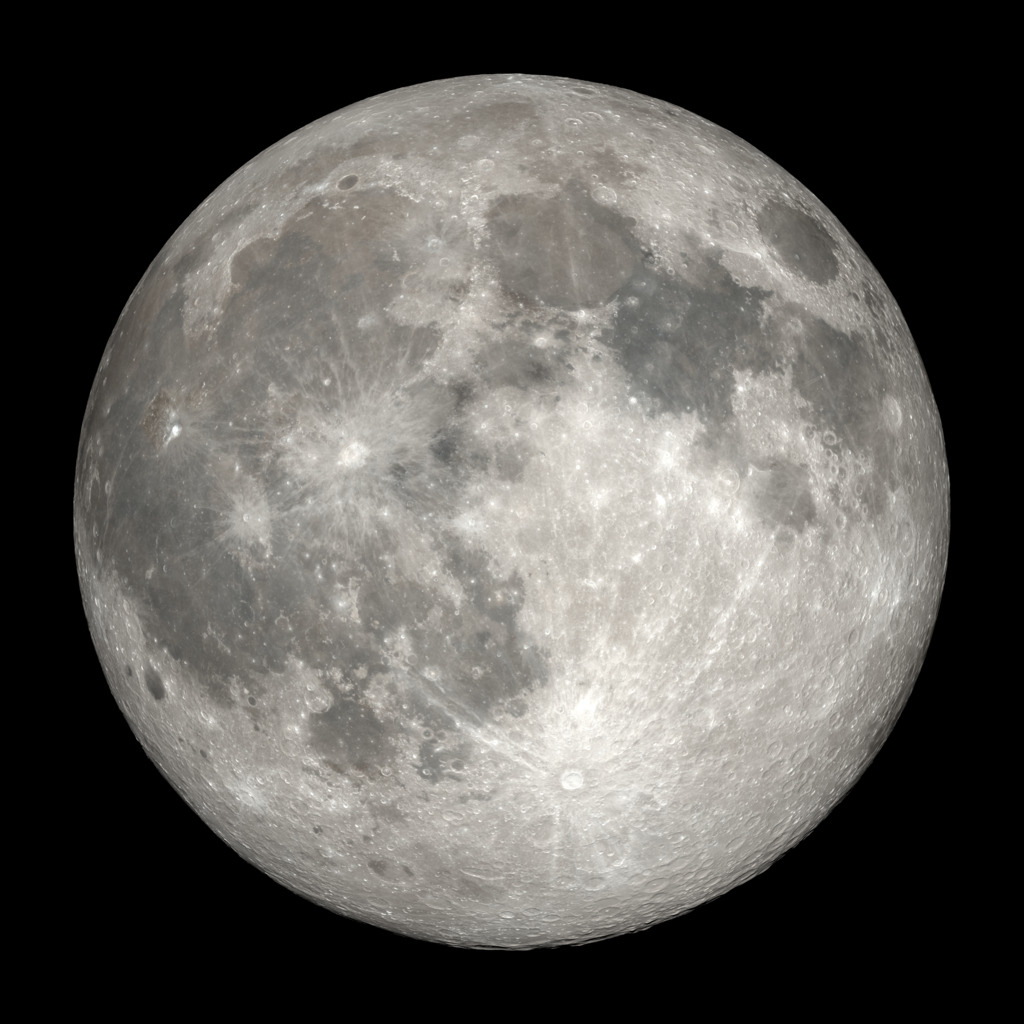
Moon: NASA / GSFC Scientific Visualization Studio
Scope: the lunar surface, end to end — touchdown at 102:45:40 GET to lunar liftoff at 124:22:00 GET. The flight out and home appears only as context.
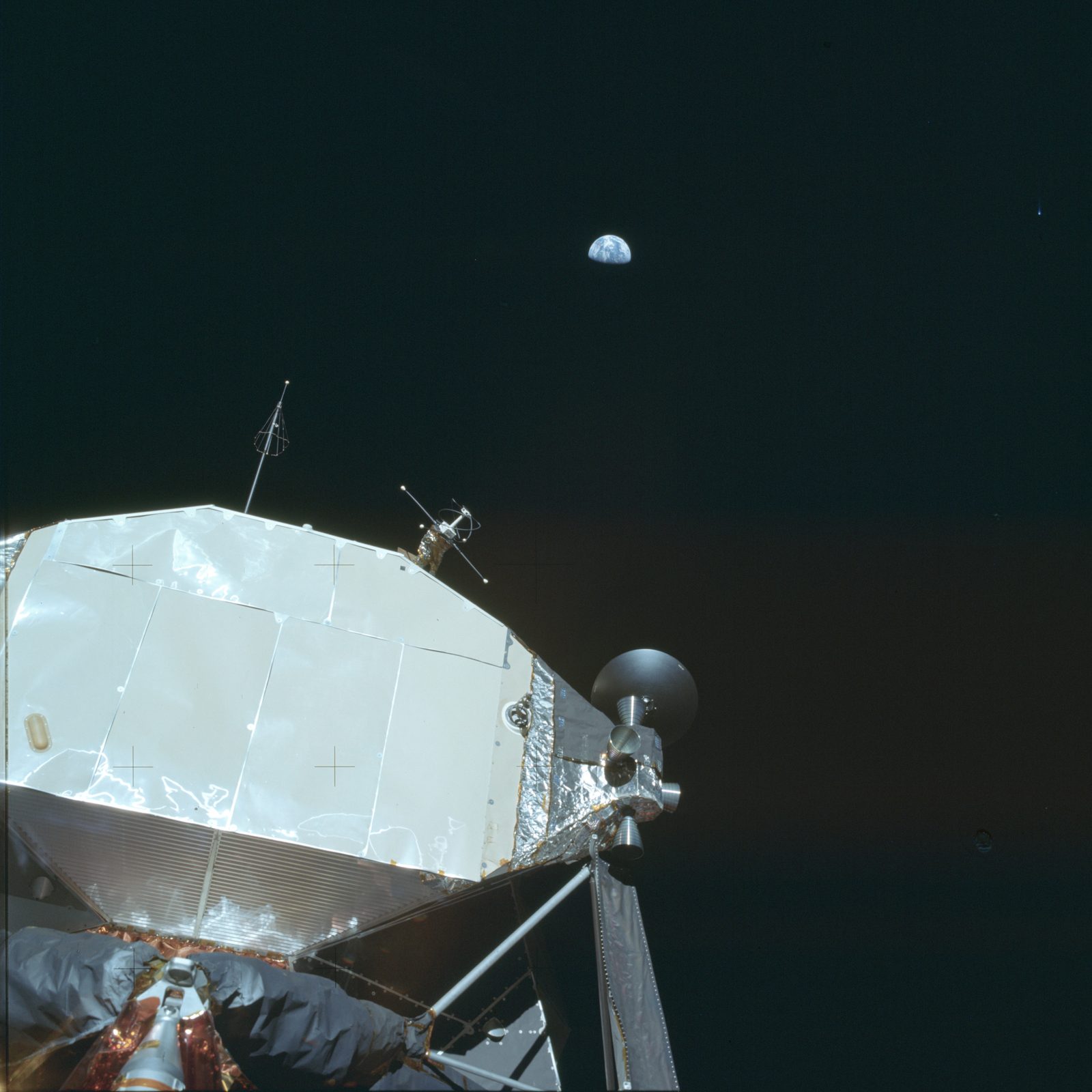 102:45:40 GETThe landingFly Eagle’s final three minutes — the alarms, the fuel light, all three voice loops at once.
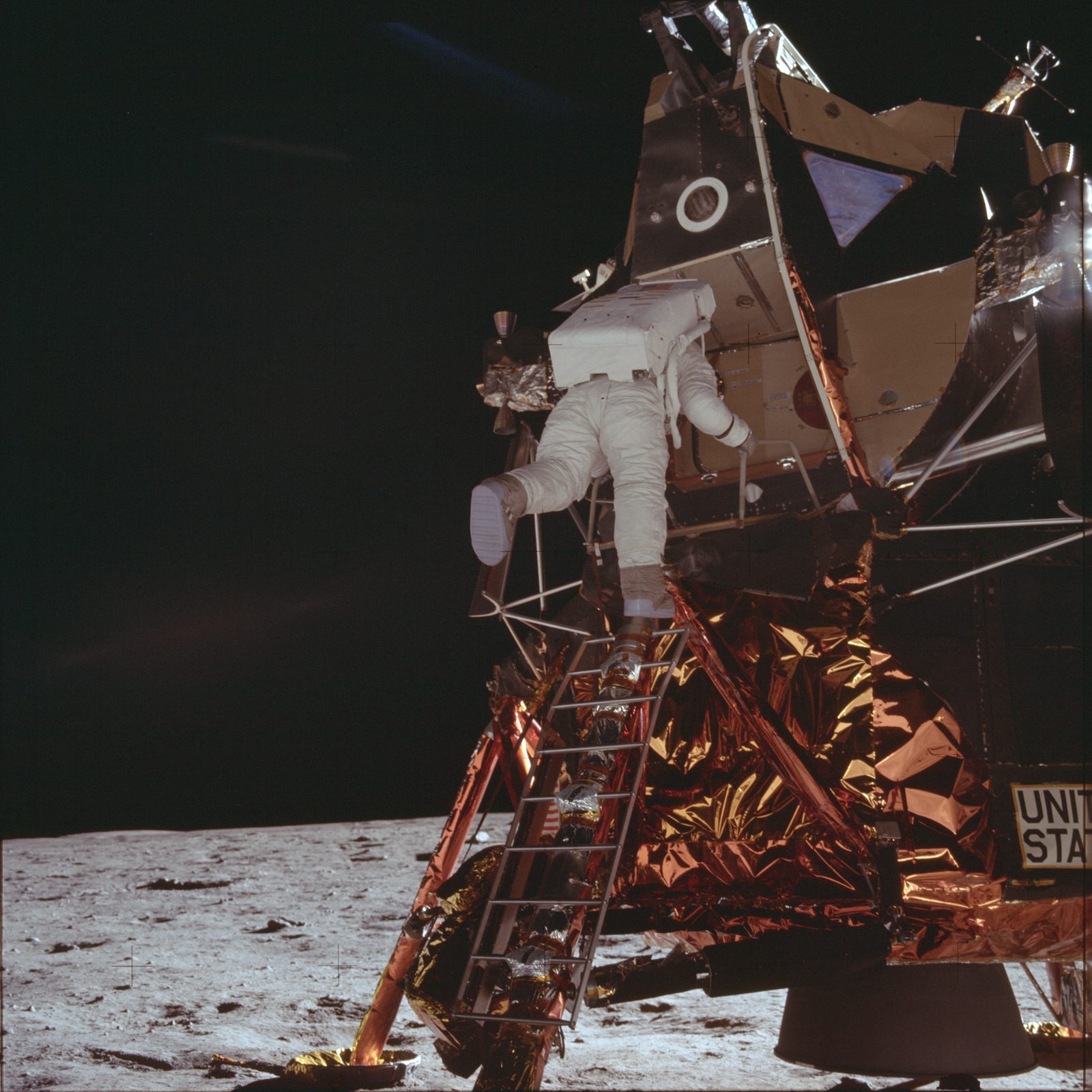 109:24:48 GETThe first step”One small step” across three independent voice records, synced on one clock.
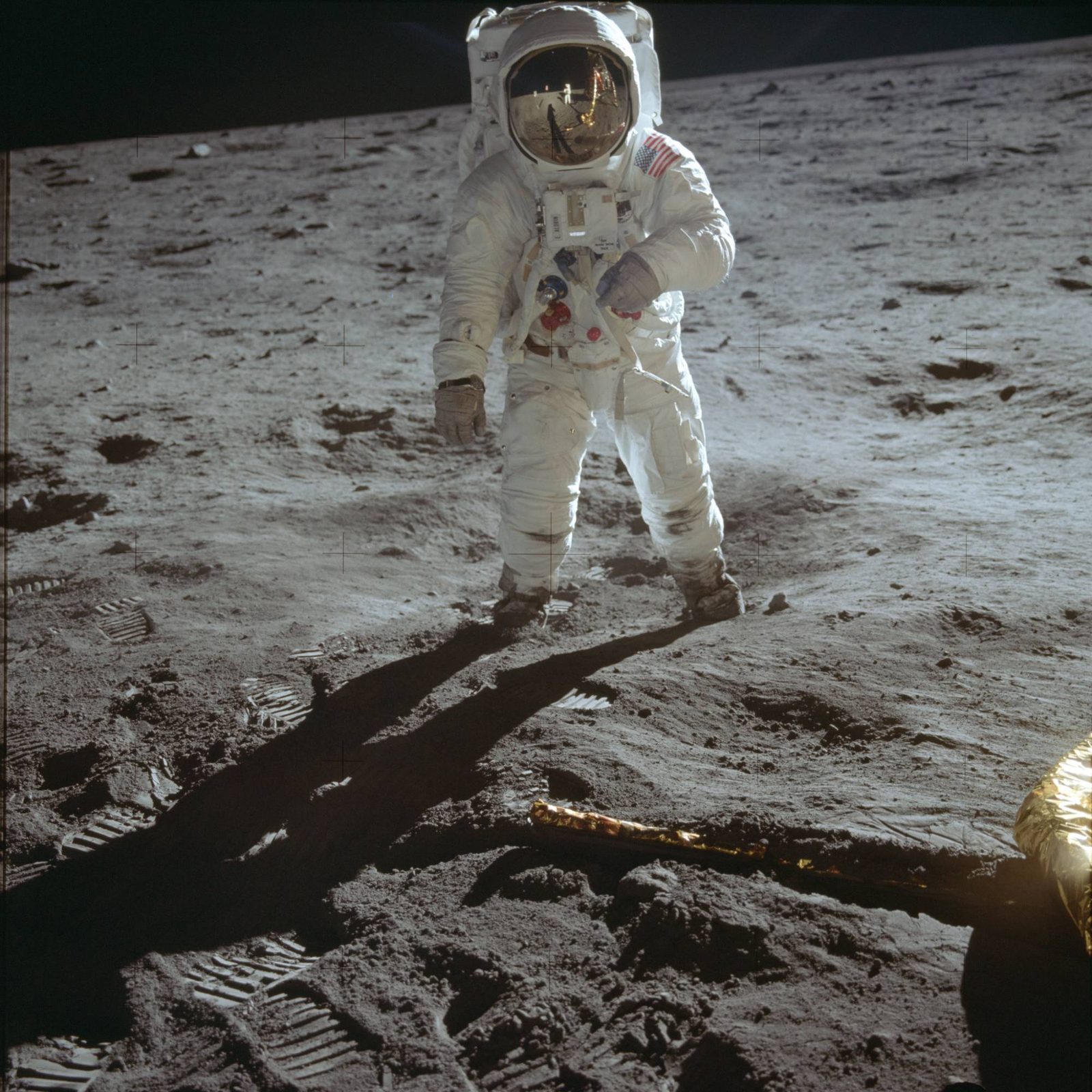 2 h 31 mThe moonwalkWhat two men actually did outside — the flag, the TV, the experiments, the rocks.
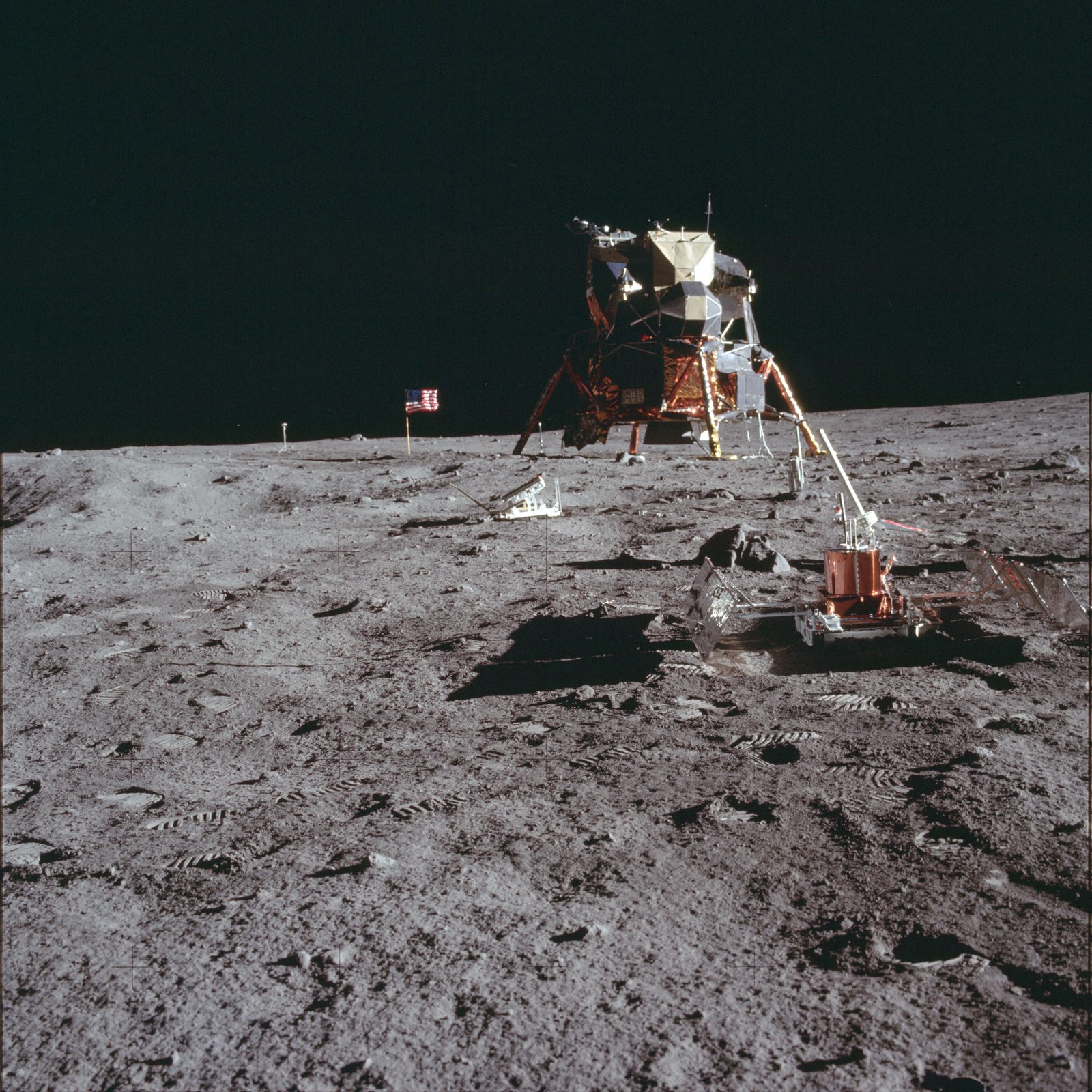 EASEPThe experimentsThe instruments left at Tranquility Base — one still reflecting laser pulses today.
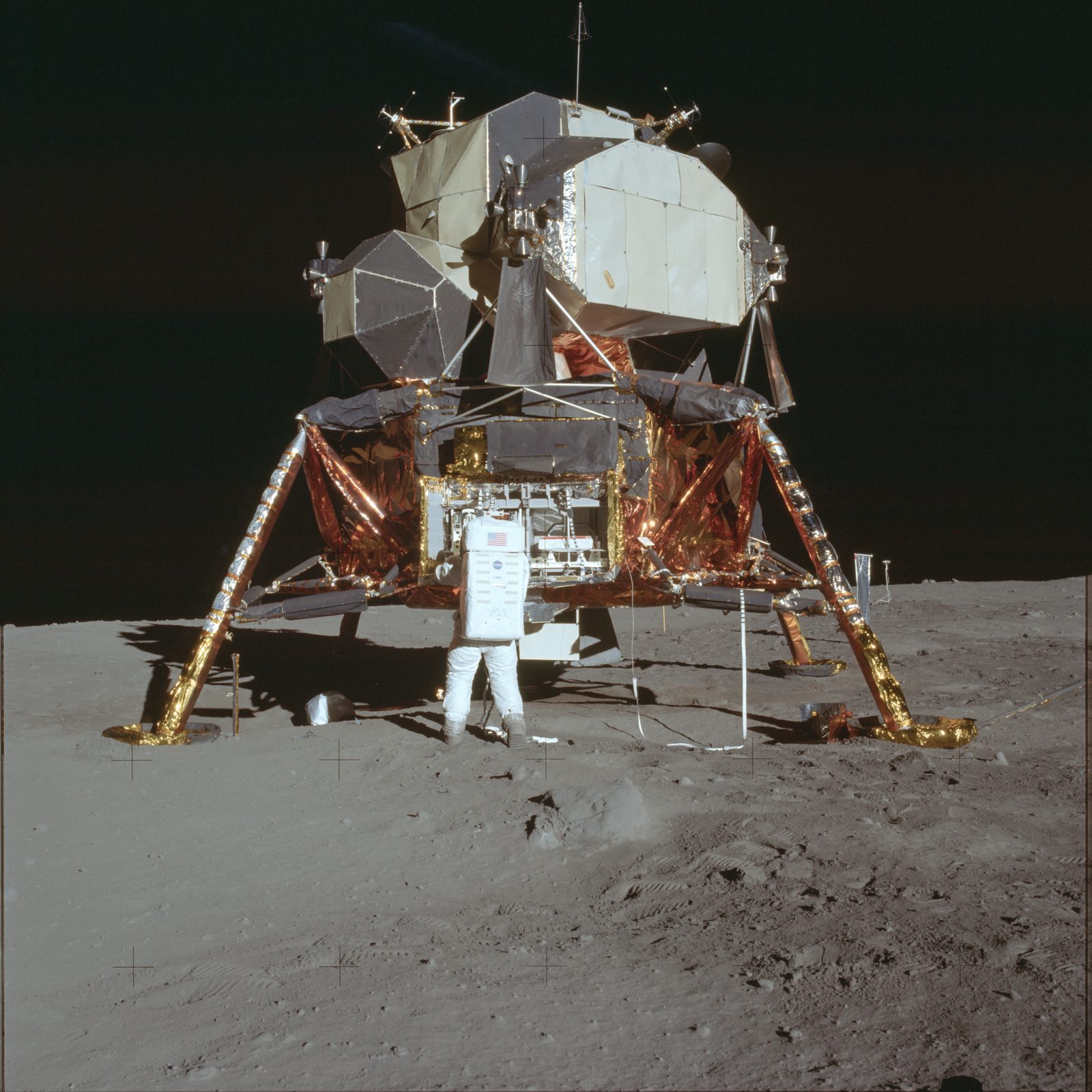 21 kgThe rocksAll 53 returned samples — filter them, sort them, trace each one home.
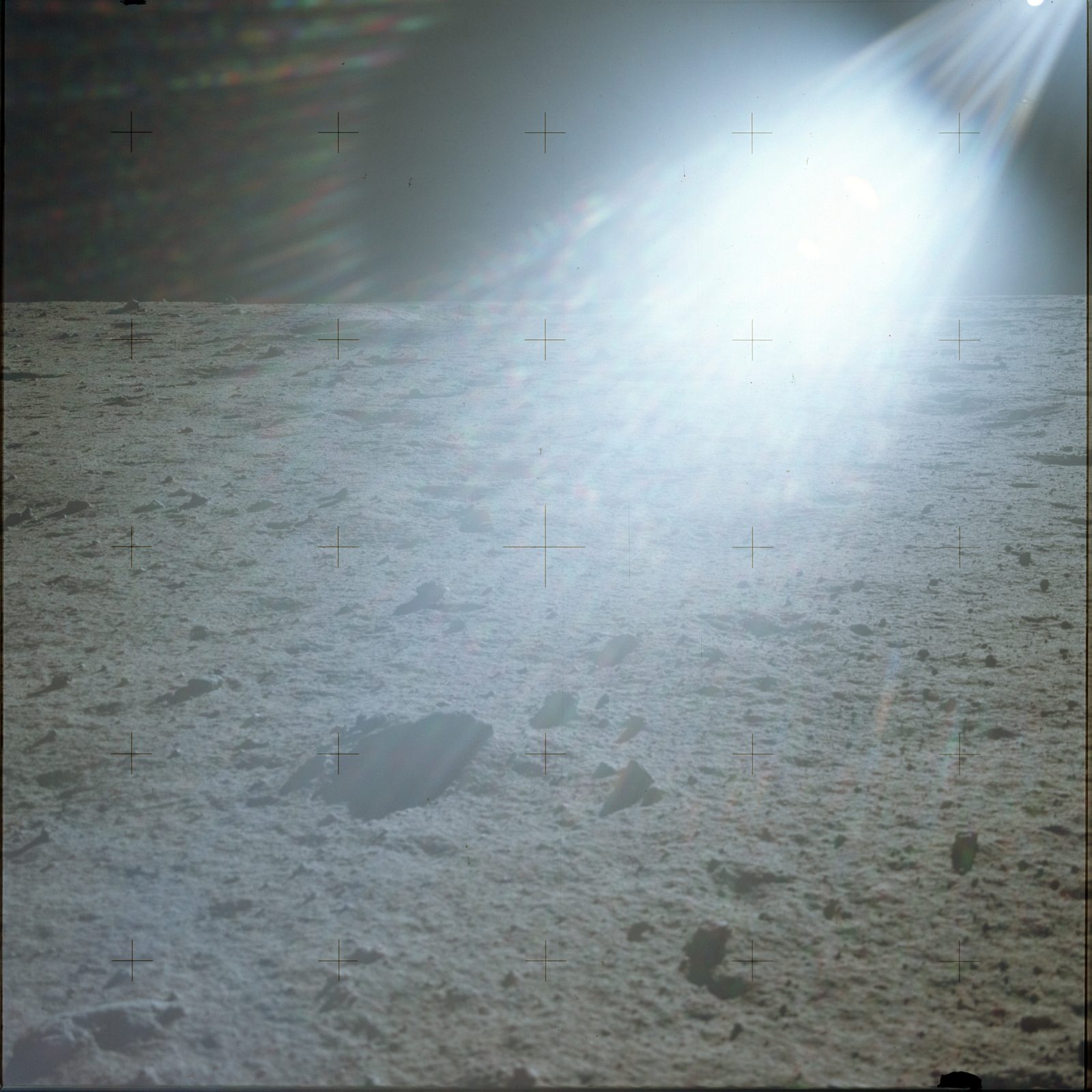 1969 → todayWhat it provedThe first-order scientific results, synthesized from the record.
West crater stands ~490 m from the descent stage — not the “~400 m” the 1969 reports rounded to.
The last three minutes →EVA prep ran about an hour past the plan — an overrun traceable through all four layers of the procedural chain.
One hour, four layers →Only two of the three voice records carry the first step — the CM’s onboard tape has no leg of it at all.
One moment, three records →Mission clock
Follow the flight in real time on the anniversary, or scrub from liftoff to splashdown. Open the clock →
Photo-map
Pan and zoom the full-resolution 2011 LROC image of Tranquility Base, with clickable markers. Open the map →
Link map
Trace how sources, analyses, transcript moments, and wiki articles connect across the archive. Open the link map →
Glossary
Every acronym and term of art in the archive, each with a one-line definition. Look up a term →
Every claim cited to the NASA record · checked against 2011 LROC imagery · public domain, properly credited — about this archive →
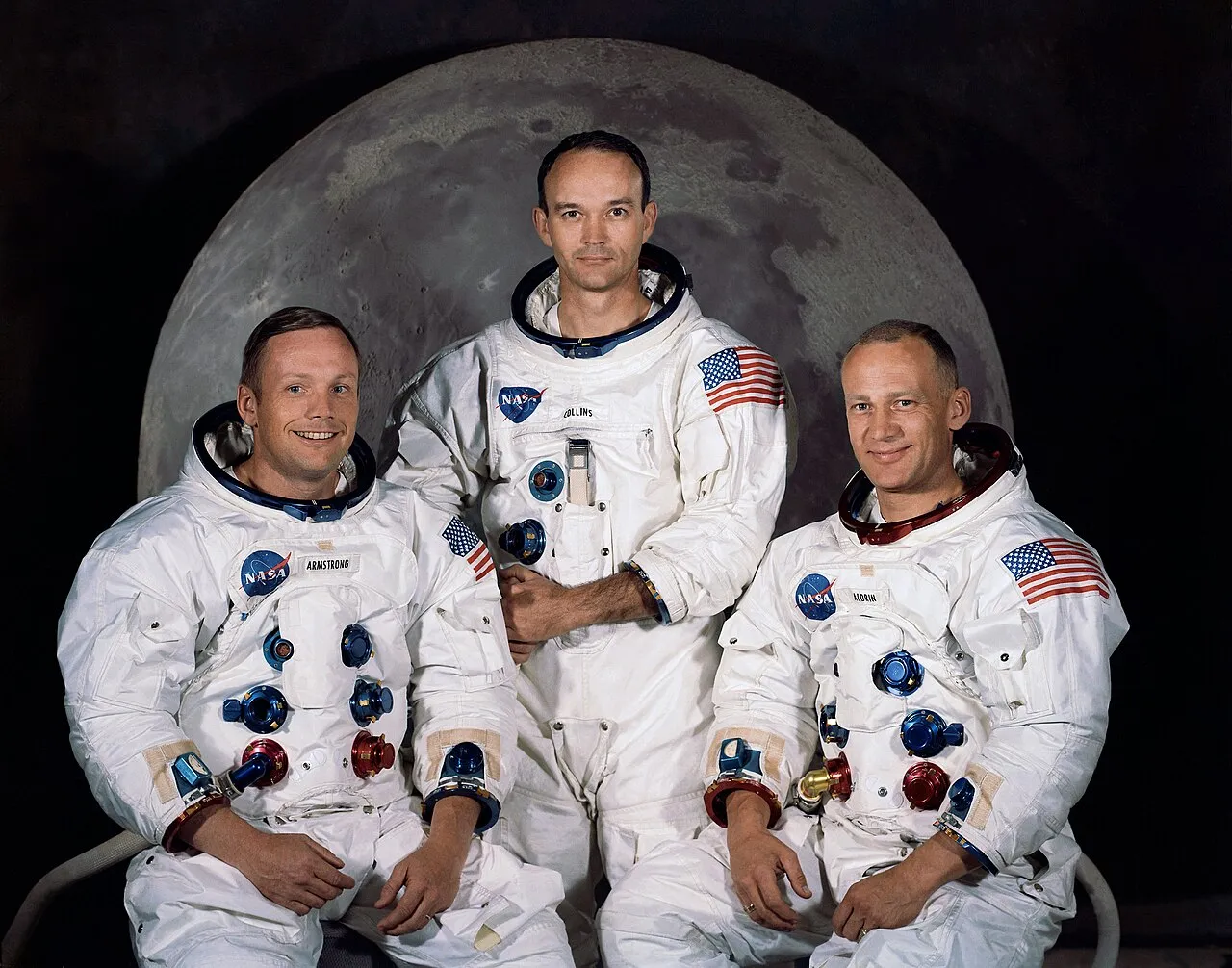
The crew of Apollo 11 — Neil A. Armstrong, Michael Collins, and Edwin E. “Buzz” Aldrin Jr. Photo: NASA.